
In a world flooded with information and interchangeable advertising messages, it is becoming increasingly difficult for brands to generate genuine attention. Traditional push communication is losing its effectiveness, users are becoming more sensitive to sensory overload, and brands are under pressure to generate genuine relevance. Users don't just want to consume, they want to experience.
This is where gamification comes in: the art of integrating game-like elements into a non-game context to increase motivation, interaction, and long-term loyalty. Gamification is not meant to be a “gimmick,” but rather a behavioral economics tool that can achieve measurable effects on brand awareness, customer loyalty, and conversion rates. Brands that rely on gamification not only achieve higher engagement rates, but also transform passive consumers into active participants—and often even into loyal brand fans.
Gamification refers to the use of game mechanics such as points, competitions, levels, or rewards in contexts that originally had nothing to do with games. The principle is simple, but extremely effective.
However, gamification does not mean that brands simply develop a game. It means that they use game principles to make everyday interactions more attractive and meaningful. This is achieved through mechanisms such as progress, challenge, reward, or competition—all elements that people are familiar with from games and understand intuitively. The decisive factor here is not the game itself, but the way in which experiences are constructed. Gamification makes interactions not only functional, but emotional – and that is precisely what has an enormous impact in marketing. Instead of persuading users, gamification draws them in. It becomes a driver for digital interaction and creates a connection that has an impact far beyond the moment.
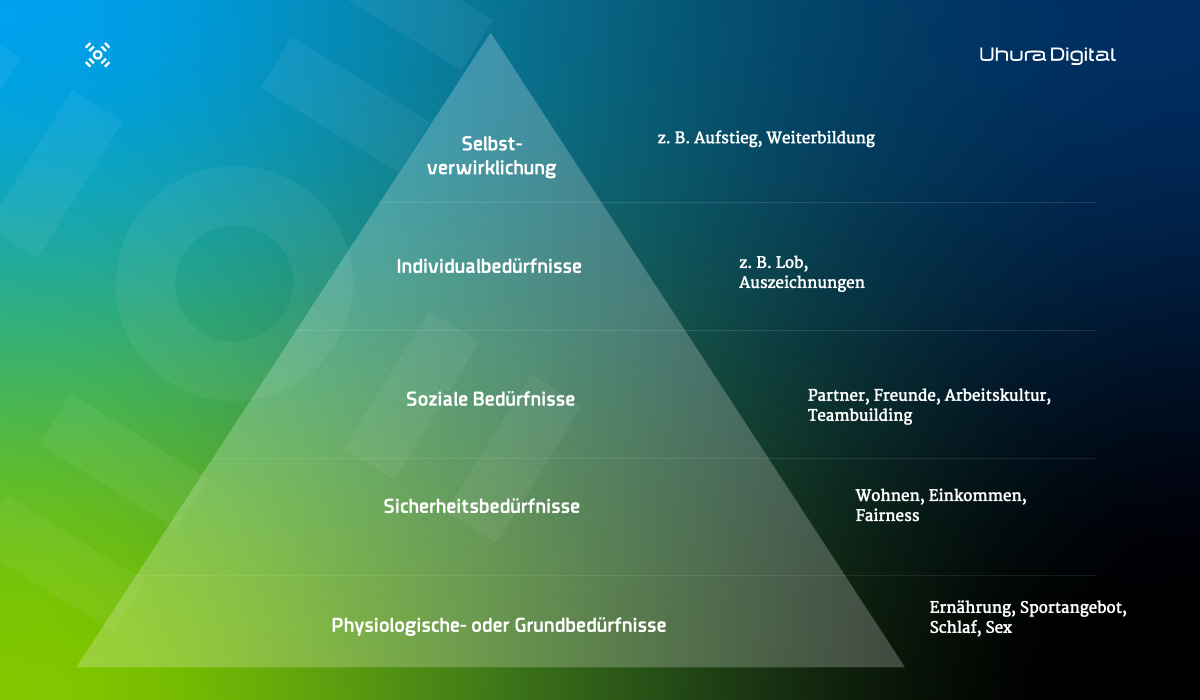
Successful gamification is based on deeply rooted psychological principles. People rarely act purely rationally—they respond to needs that can be addressed particularly well through playful elements. Two psychological models help to understand this effect: Maslow's hierarchy of needs and McClelland's theory of motivation.
According to Maslow, once their basic needs for food, sleep, safety, etc. are met, people primarily strive for social belonging, recognition, and self-actualization. This is exactly where gamification comes in. Social elements such as communities, team challenges, or leaderboards promote the feeling of being part of something. Visible successes in the form of points, badges, or levels satisfy the need for recognition and status. Challenges and playful learning processes enable users to develop further and discover new things—a central aspect of self-actualization.
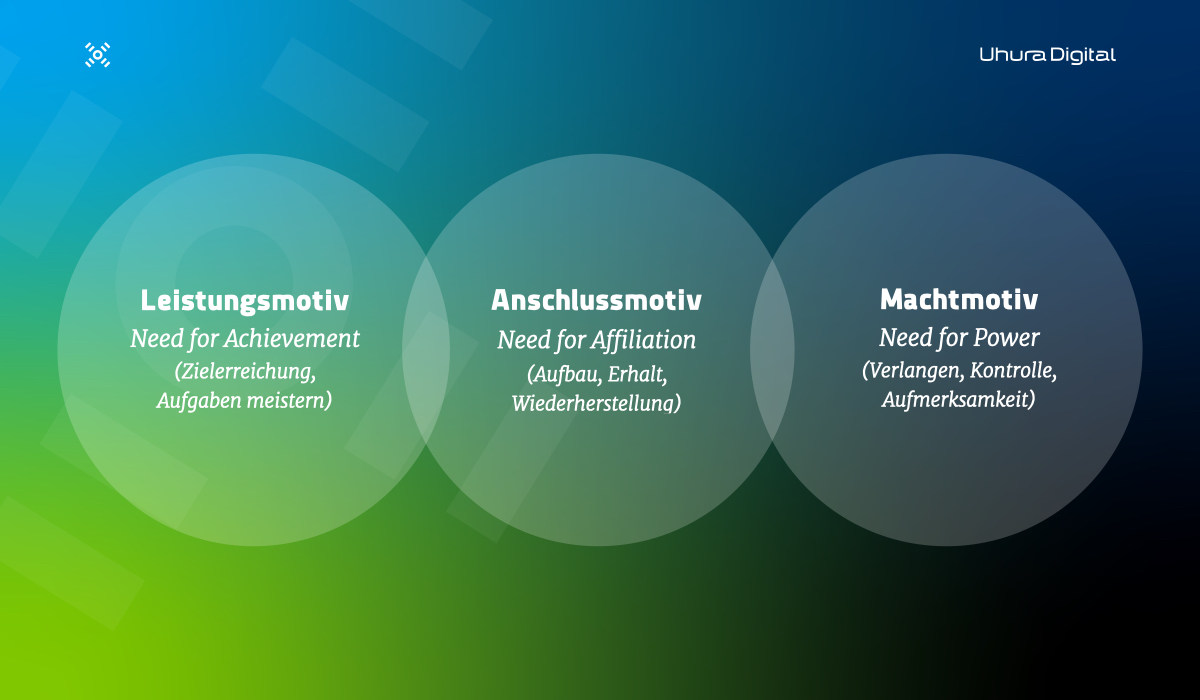
McClelland adds three specific motivators to this approach: achievement, affiliation, and power. People with a strong need for achievement respond particularly strongly to goals, progress, and measurable success. Those who are more affiliation-oriented are motivated by social interaction and shared experiences. Users with a strong desire for power or influence are primarily attracted to competitions, rankings, and exclusive status symbols.
For marketing, this means that successful gamification takes different needs and motivations into account. It doesn't just offer a single incentive, but creates a system in which different types of users are addressed in their own way. People who feel seen, rewarded, or challenged interact longer, more intensely, and with a more positive attitude. They develop a relationship with the brand because they don't just consume content, they become part of an experience. In gamification/psychology, this state is referred to as “flow”: a mixture of focus, motivation, and intrinsic reward. For brands, this means interactions that are longer, more intense, and more voluntary.
What makes gamification particularly valuable in marketing is its ability to translate playful motivation directly into concrete KPIs. For example, when users are rewarded for interaction, they are more likely to return regularly. The brand becomes a place where you can discover or achieve something—not just an information platform.
Companies that successfully use gamification often see significant increases in areas such as engagement, retention, and return rates. This is because gamification breaks interactions down into small, achievable steps. Each completed task generates a kind of mini sense of achievement, which in turn motivates users to continue. This effect can be observed particularly impressively in digital loyalty programs: the more points or status levels someone has accumulated, the stronger the psychological need to “stick with it” and not lose progress. Gamification also shows its strength in conversion optimization. A quiz that playfully guides users to a product feels less like advertising and more like a personal recommendation.
In summary, the objectives and advantages are:
Gamification thus creates a marketing environment in which users interact voluntarily, positively, and with engagement—a decisive advantage in a competitive market.
Gamification doesn't have to be loud or obvious. Often, it's subtle mechanics that make the difference. A progress bar on a website can motivate users to finish filling out a form. A digital stamp card can encourage customers to buy more often. Even small challenges – such as “Do it in 30 seconds” or “Answer three questions to receive reward XY” – can make the user journey more dynamic.
Other brands, on the other hand, create entire worlds of experience. A mobile mini-game that is part of a campaign. An interactive story that guides users through a product universe. A gamified event where visitors collect points, solve puzzles, or complete missions to win prizes.
Gamification is flexible—it can be fully integrated into the brand experience or function as a temporary campaign. The important thing is that it fits meaningfully into the context and offers real added value, not just a cosmetic effect.
In social media, playful formats generate high levels of interaction because they invite participation. A quiz in an Instagram story, a TikTok challenge mechanism, an AR filter: gamification enhances the dynamics of platforms and brings brands to life where users already spend their time.
On websites and in UX design, gamification primarily serves a guiding function. It can guide users through purchasing decisions, simplify complex information, or reward interactions. An interactive product finder, for example, works like a little game, the result of which is a suitable offer.
Gamification unfolds its full potential in apps: daily missions, progress rewards, level systems, personalized challenges. These elements can lead users to not only use an app, but also integrate it into their everyday lives.
Even in email marketing—a channel that traditionally tends to function in a linear fashion—gamification opens up new possibilities. An email can be part of a series that is only “unlocked” when certain actions are taken. Or it can contain a puzzle whose solution leads to a landing page. The line between information and interaction becomes blurred.
Gamification is increasingly being used at events to actively guide visitors through rooms, topics, and stations. A trade fair can become an interactive obstacle course or an escape room, a workshop can become a mini adventure, and a product launch can become a journey of discovery.
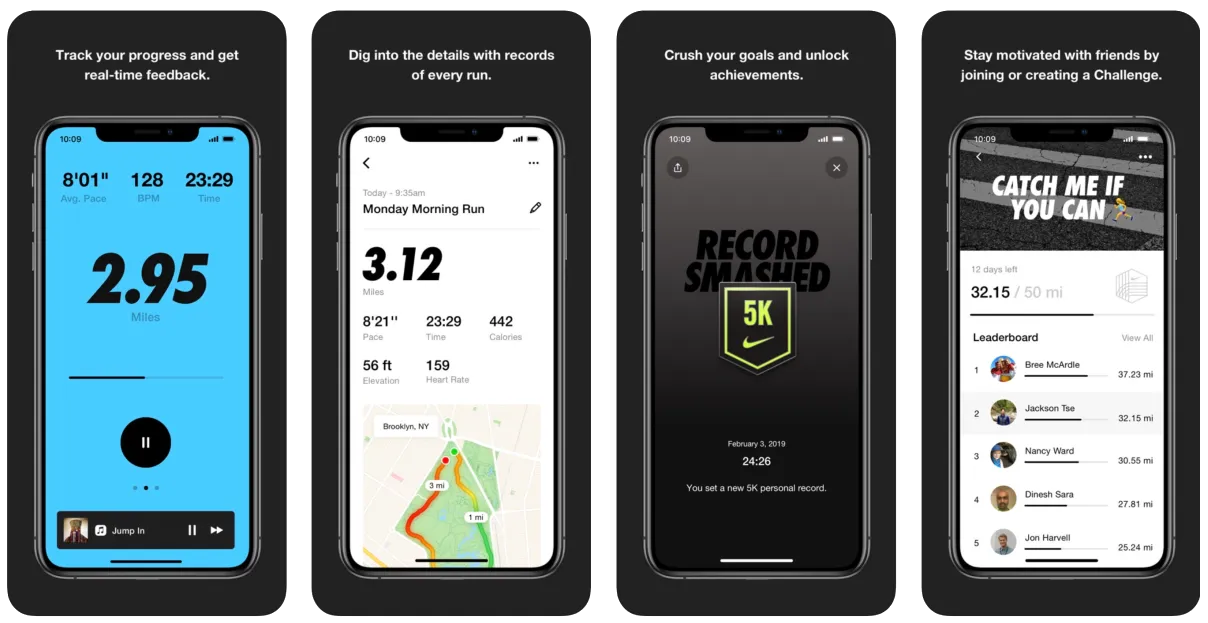
The Nike+ App is considered one of the best-known examples of successfully implemented gamification in marketing because it consistently translates physical activity into a motivating system of goals, rewards, and social interaction. Users receive virtual trophies and badges for milestones achieved, distances completed, or special achievements. These are collected in their personal profile and serve as visible symbols of success. At the same time, they are not only decorative but also functional: certain achievements grant access to new training content or programs.
At the same time, progress can be compared with others, for example via rankings or joint challenges. This creates a moderate competitive spirit, which provides additional incentives.
In addition, the app makes extensive use of personalized challenges and coaching. Training plans, recommendations, and tips are tailored to the individual's performance level and goals.
Progress tracking, challenges, and social comparisons turn training into a playful routine—and the Nike brand remains a permanent part of its community's everyday life.
The Pepsi AR campaign is a striking example of how gamification can also function as a short-term, attention-grabbing marketing measure. The aim of the campaign was to bring the brand message “Live for Now” to life and transform classic outdoor advertising into an interactive experience. To achieve this, augmented reality was used to transform a bus stop into a seemingly transparent “window” that showed a real-time view of the street – but with the addition of unexpected, playful scenarios.
Passersby were suddenly confronted with spectacular events, such as a giant robot or a falling meteorite. The gamification aspect lay less in classic game mechanics such as points or levels, and more in the principle of surprise, interaction, and immersion.
At the same time, the campaign was designed to have an impact beyond the physical location. The reactions of those involved were filmed and shared as social content.
The playful staging created high memorability, enormous organic reach, and measurable effects on brand perception and sales. The campaign shows that gamification does not necessarily have to be designed for long-term loyalty, but can also be used as a powerful tool for viral, experience-oriented brand communication.

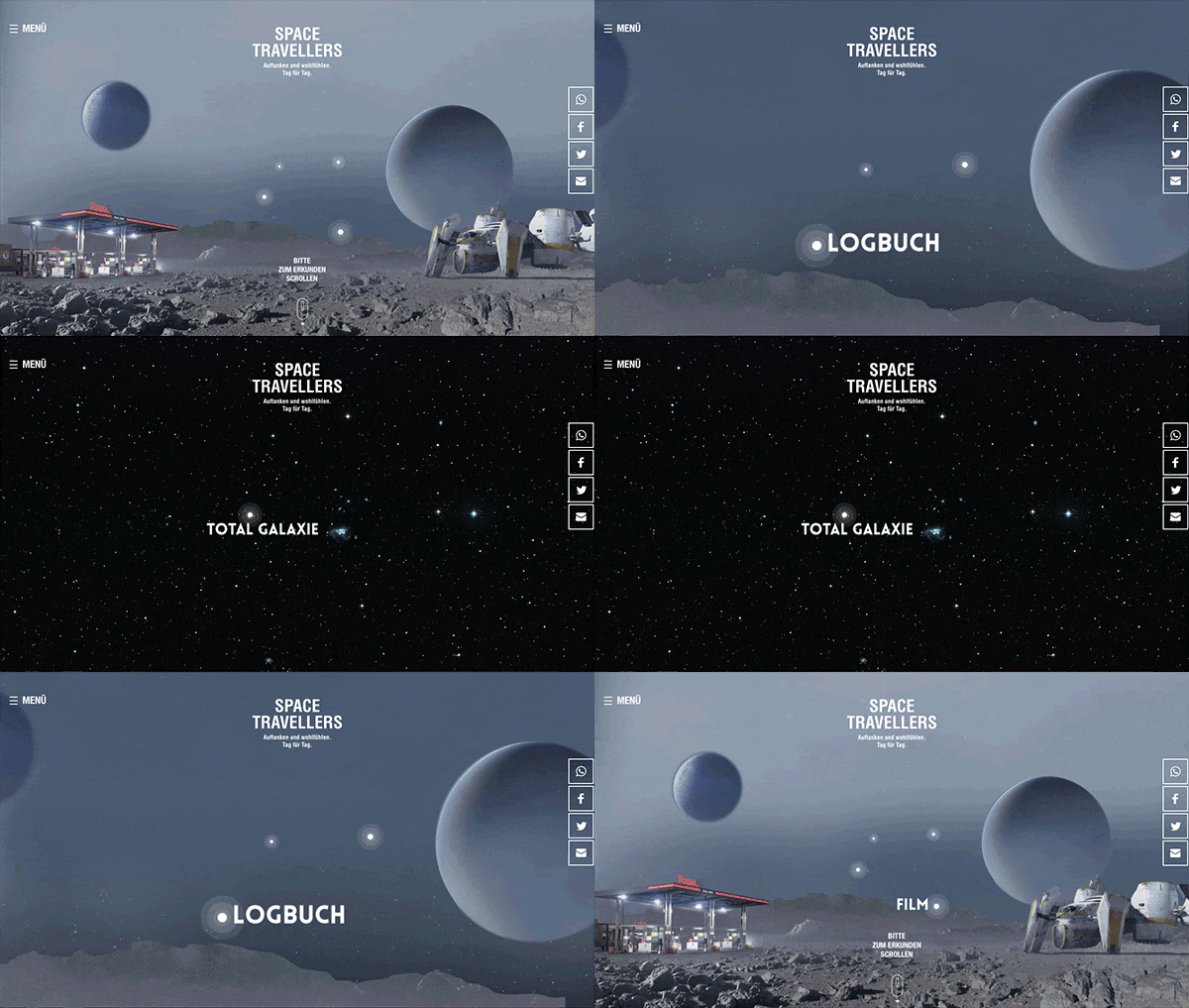
Uhura Digital also developed various projects and features for Total Energy and its gas station marketing that specifically used gamification in marketing and UX design to increase the effectiveness of the measures.
On campaign websites, messages and content were deliberately staged in a surprising way according to the principle of “navigation as an experience,” so that users would engage more intensively with the assets and messages. In addition, various seasonal campaigns repeatedly used approaches that, for example, activated local communities and invited them to compete or compare themselves with other regions—often in conjunction with price promotions or competitions.
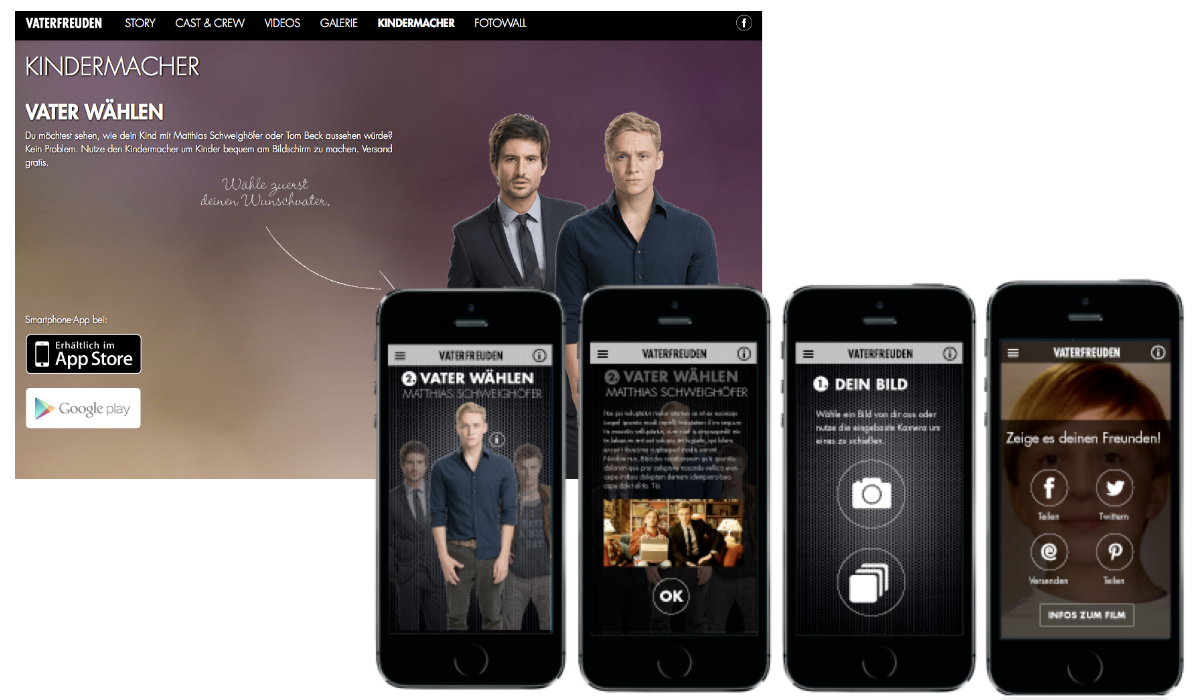
Back in 2014, Uhura Digital developed an app to promote Matthias Schweighöfer's film Vaterfreuden (Father's Joy), which allowed users to generate virtual children with one of the two main actors.
To do this, users uploaded their own photo, which was combined with images of the actors using a machine learning algorithm. This resulted in virtual images of a possible “offspring” that could then be shared directly on social networks.
Gamification is just getting started. Technologies like AI and AR are opening up possibilities that go way beyond points and rewards. Interactions can be personalized in real time, challenges can be customized, and rewards can be generated dynamically. Brands will create learning environments that adapt to user behavior in real time—like a game that plays along.
Another trend is the fusion of gamification and loyalty. Points systems are becoming small ecosystems in which users not only collect points, but also discover, trade, exchange, or master challenges together. Brands are becoming “playable spaces” in which customers are not just users, but protagonists in a story.
Gamification thus becomes a strategic differentiator. Brands that create experiences that motivate, reward, and inspire will stand out clearly in a noisy, digital world.
If you want to use gamification specifically for marketing, UX, or digital campaigns, Uhura Digital is happy to support you—from the initial idea to strategic conception to technical implementation. Together, we develop interactive experiences that motivate users, strengthen brand loyalty, and deliver measurable results. Just get in touch with us.



.webp)

